

In an era of uncertain incomes, record mortgage terms, and dwindling household savings, there remains a striking contradiction at the heart of many homeowners’ financial plans: the house itself is insured, often mandatorily, but the income that pays for it — and the life behind its front door — is often left exposed.
The mortgage protection gap is not a product problem. Nor is it an affordability issue in the way many people assume. It is, at its core, a perception problem. Too many people see personal insurance — be it life cover, critical illness or income protection — as optional, or worse, irrelevant. Yet the statistics tell a very different story, one that suggests we are collectively walking a financial tightrope with little more than hope as a safety net.
A Nation of Homeowners Without a Buffer
The British aspiration for homeownership remains as strong as ever. According to the Financial Conduct Authority, over two-thirds of first-time buyers in 2024 opted for mortgage terms of 30 years or more. This reflects both affordability pressures and a generational shift toward longer financial commitments. But while the mortgage landscape has adjusted to economic reality, our protection planning has not.
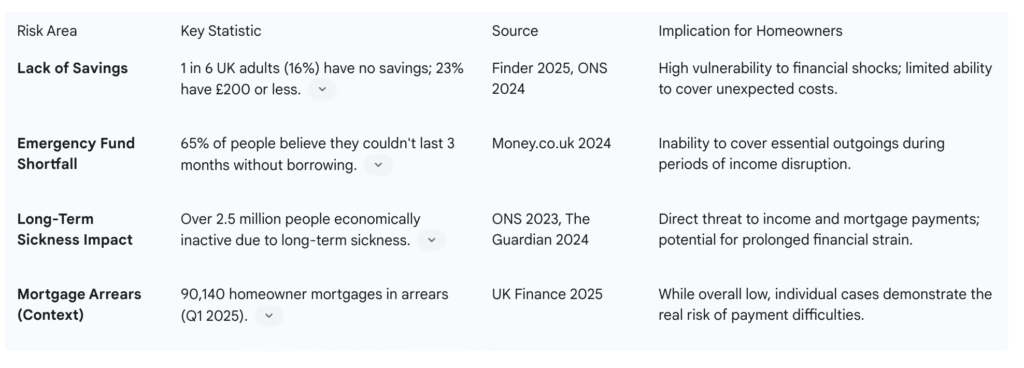
The data on household savings is stark. Approximately one in six UK adults have no savings at all. Nearly a quarter hold less than £200 — not enough to cover a week’s average expenses. Two in five have less than £1,000. These aren’t edge cases; they’re representative of millions. And yet, many of these same households are responsible for monthly mortgage payments that stretch into the thousands.
Financial experts routinely advise that households keep an emergency fund equivalent to three months’ essential outgoings. But a 2024 study found that 65% of UK adults believe they would not last three months without needing to borrow. In practice, this means that for the majority of homeowners, the ability to remain in their home depends on one thing: uninterrupted income. And yet, very few take steps to insure it.
The Reality of Income Risk
The risk of losing one’s income is not as abstract as some would prefer to think. Since the pandemic, the UK has seen a significant and sustained rise in long-term sickness. As of 2025, over 2.8 million people of working age are economically inactive due to ill health. This is not a future threat; it’s a present crisis. And it affects people of all ages — not just those nearing retirement.
Musculoskeletal conditions such as back or neck pain are among the leading causes of long-term absence, alongside stress and mental health issues. These are not rare or exotic illnesses; they are everyday ailments that strike without warning and linger without respect for mortgage due dates.
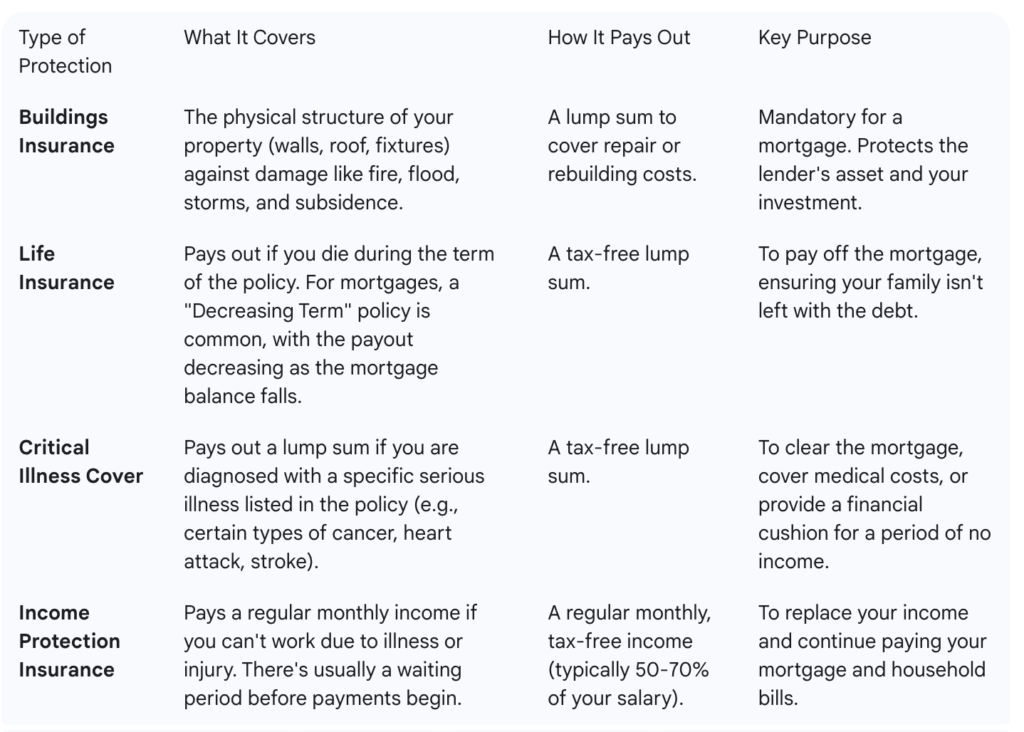
Meanwhile, critical illness statistics paint a similar picture. Over 400,000 people are diagnosed with cancer annually in the UK. In 2024, insurers paid out £1.3 billion in critical illness claims — the average payout was over £67,000. These are real, life-altering events that change the shape of household finances overnight. But only a small proportion of the population have policies in place to deal with them.
The False Comfort of Employer Benefits and State Support
Some homeowners rely on workplace benefits or government support as a fallback. But this trust is often misplaced. Statutory Sick Pay currently stands at just £118.75 per week — for a maximum of 28 weeks. That figure is barely a fifth of the average adult’s weekly expenses and entirely inadequate when it comes to mortgage obligations.
Employer benefits, while helpful, are often limited in duration or scope — and are lost entirely when changing jobs. A career switch, redundancy or business closure could leave someone entirely exposed. What’s more, group policies rarely cover the full breadth of an individual’s financial responsibilities. Personal insurance, on the other hand, is portable, adaptable, and built around the individual rather than the job.
Why We Delay — and Why That’s Dangerous
There is a cultural element to this too. Britons are famously reticent to talk about death, illness or financial disruption. And while we insure our cars, phones and even our pets without hesitation, we often avoid protecting the people and incomes that make our homes possible in the first place.
Many delay the conversation. “I’ll sort it later.” “I’m still young.” “It’s just another expense.” These are not unfamiliar sentiments. But they are often short-sighted. The paradox is that the best time to secure personal protection is precisely when you don’t feel you need it. That’s when premiums are lower, health is better, and choice is wider. Delay can be costly — not just financially, but emotionally and practically if the unexpected arrives unannounced.
Beyond Financials: The Emotional Cost of Unpreparedness
There is also a more human dimension. Financial fragility breeds stress. A quarter of people with no savings report lower life satisfaction. Nearly a third feel anxious about money on a regular basis. In times of crisis — illness, bereavement, disability — those pressures multiply. The emotional toll of unpreparedness often leads to rushed decisions, relationship strain, and long-term regret.
Protection insurance cannot prevent life’s difficulties, but it can cushion the blow. It can create space to make decisions from a position of strength, not panic. It can preserve dignity at a time when everything else feels uncertain.
A Change in Mindset
We need to shift the narrative. Personal protection is not about betting on misfortune — it’s about accepting that risk is part of life, and that prudent planning is not pessimism, but realism.
Financial advisors and brokers, including those at Quick Mortgages, have a role to play in leading this conversation. Not by pushing products, but by encouraging people to assess their true level of resilience. If your income stopped tomorrow, how long could you maintain your lifestyle — or your mortgage? What would your partner, children, or dependants face in your absence?
These are not easy questions. But they are essential. And asking them today, while options are still open, is an act of responsibility — not fear.
The Stats You Need to Know
Looking at the numbers can make these risks feel more real. Here are a few key statistics to consider as you think about your own situation.
UK Financial Vulnerability:
- 2.5 million people in the UK were economically inactive due to long-term sickness in 2023, a significant increase from pre-pandemic levels. (Source: Office for National Statistics)
- 39% of UK adults have less than £1,000 in savings. For many, a single missed paycheque could create a financial crisis. (Source: Finder 2025 Household Savings Report)
The Reality of Critical Illness:
- In 2023, the average critical illness claim paid out in the UK was over £67,000.
- Cancer remains the number one cause for critical illness claims, accounting for around 60% of all payouts. (Source: Association of British Insurers, 2024)
Choosing the right protection is a deeply personal decision. It’s not just about what you can afford; it’s about your own circumstances:
- Do you have dependents? If you have a partner or children who rely on your income, life insurance is a crucial conversation to have.
- What is your employment like? If you’re a freelancer or self-employed, you likely don’t have sick pay, making income protection even more important.
- How much do you have in savings? If your household has a robust emergency fund, it might cover a short period of illness. However, most people’s savings wouldn’t last long in a long-term illness scenario.
Insuring the Intangible
A mortgage represents more than a loan. It’s the promise of a home, a future, and stability. But that promise is fragile without the right support. Personal insurance — whether life cover, critical illness or income protection — is not about selling safety. It’s about buying time, choice, and peace of mind.
In a world where economic shocks come fast and often without warning, the most powerful financial decision you may ever make is not the size of your deposit, but your willingness to protect what lies beyond the bricks.
——–
Disclaimer:
This article is for general guidance purposes only and does not constitute legal, financial, or professional advice. Mortgage products and their terms can vary, and it is important to seek advice from a qualified, regulated professional who can assess your individual circumstances. Please ensure you consider your unique needs before making any financial decisions.
While every effort is made to ensure that the information provided on this blog is accurate and up-to-date, we do not guarantee its completeness or accuracy. The mortgage market can change rapidly, and the information on this blog may become outdated. We recommend verifying any information before acting on it and seeking tailored advice.
THINK CAREFULLY BEFORE SECURING OTHER DEBTS AGAINST YOUR HOME. YOUR HOME OR PROPERTY MAY BE REPOSSESSED IF YOU DO NOT KEEP UP REPAYMENTS ON A MORTGAGE OR ANY OTHER DEBT SECURED ON IT.
